Last updated 2026-08-18
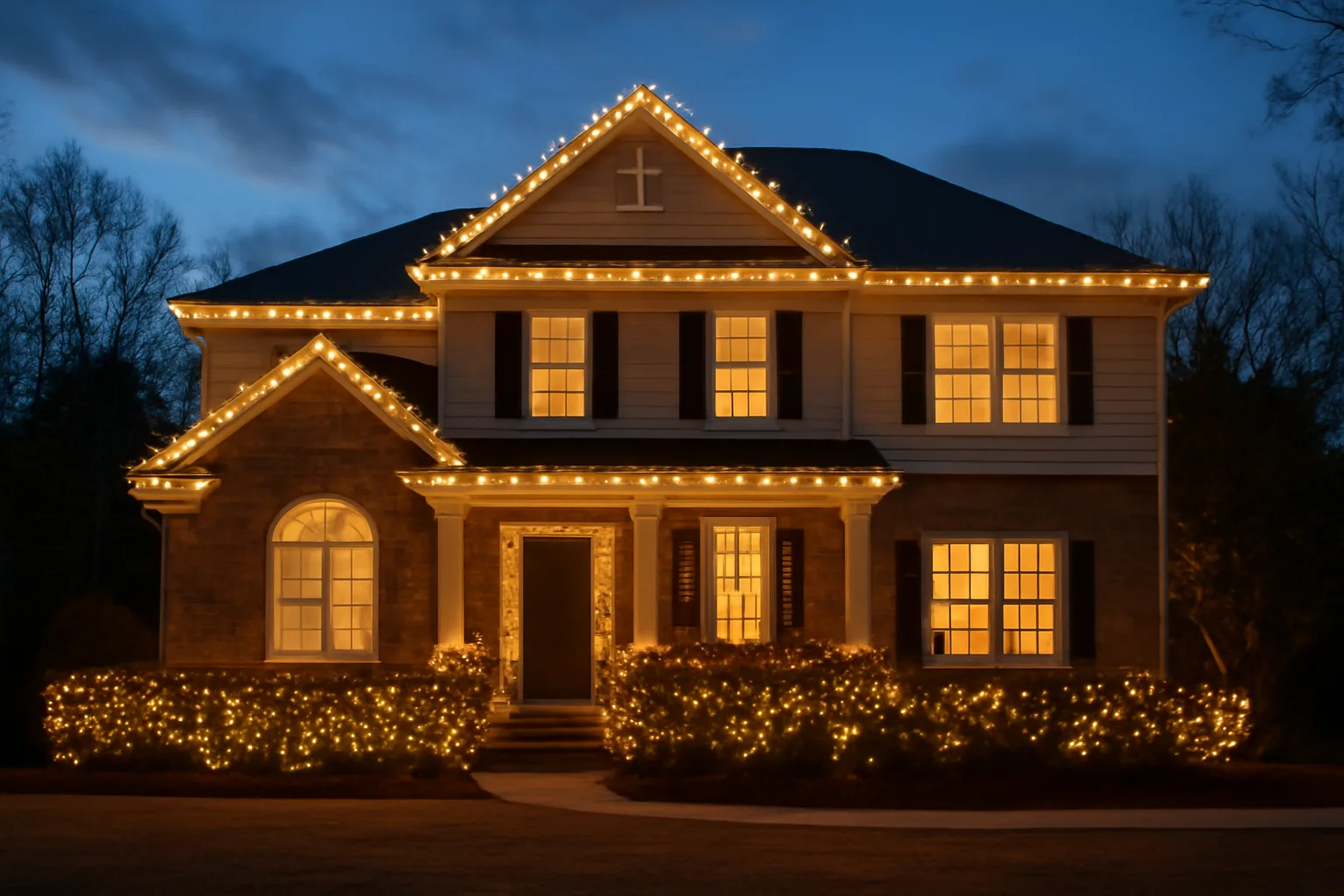
TL;DR
Alabama doesn't require an electrical contractor license to hang temporary plug-in holiday lights, but you do need a city business privilege license (usually $50 to $200 a year). Professional installation runs $200 to $500 for a standard single-story home, and most jobs take 2 to 4 hours. A one-time $129 Hang + HOA + Take-Down Kit from HolidayLightPath cuts your recurring install costs to near zero.
Do you need a license for holiday lights in Alabama?
No state electrical license. You do need a local business license. The Alabama Electrical Contractors Board licenses people who do permanent wiring, panel work, and fixture installation. Hanging plug-in lights on outlets that already exist is not electrical contracting, so it sits outside that scope [2].
What you actually need is a city or county business privilege license. Alabama law requires any business operating in the state to hold one [3]. The fee changes with the municipality. Birmingham charges a base of $100 for most small businesses [4]. Mobile starts around $75 [5]. Huntsville's minimum is $50 [6]. These are annual fees. You renew each year. Some cities also want a separate zoning permit if you run the business from home, so check with your local clerk before you post an ad.
One license might cover you if you only serve a neighborhood or two. Cross into another city and you need a license there too. The state issues no blanket license that covers every municipality, so build that into your startup math. A few installers get by on a county license in unincorporated areas, but most customer homes sit inside city limits. Call the revenue department in the city where you plan to work and confirm it in writing.
How much does holiday lights cost in Alabama?
Professional installation in Alabama runs $200 to $500 for a typical single-story home. That covers lights, clips, labor, and takedown. A two-story home or a complex roof line can push the price to $600 to $1,200. HomeAdvisor puts the national average at $220 to $650, and Alabama's lower cost of living usually keeps prices in the bottom third of that range [7].
If you buy the lights yourself and pay someone just for labor, expect $1.50 to $3.00 per linear foot for the install. The lights themselves run $0.50 to $2.00 per foot depending on quality and whether you go LED or incandescent. LED costs more upfront but uses about 75% less electricity, which matters when the lights run for 6 to 8 weeks.
Here's what a $350 job in Birmingham looks like broken down:
- 150 linear feet of roofline at $2.00/ft labor: $300
- Basic C9 LED bulbs (25-pack): $35
- Clips and extension cords: $15
That's a clean install on a ranch-style house. Steep roofs, tall peaks, and dense shrubbery all push the number up. Most Alabama installers give a free estimate, so get two or three quotes before you commit.
How long does holiday lights take in Alabama?
A two-person crew finishes a 1,500-square-foot home in about 2 to 4 hours. That includes measuring, clipping lights, running cords, and testing. Larger homes with multiple rooflines or second-story peaks run 5 to 8 hours. The first job of the season always takes longer, because you're pulling out stored lights, untangling them, and hunting for dead bulbs.
Doing it yourself with a ladder and a helper? Budget a full Saturday for a standard house. The work isn't hard. The ladder moves and height adjustments eat the clock. With the HolidayLightPath $129 Hang + HOA + Take-Down Kit, you set permanent attachment points once and future installs drop to under an hour a year. That gap adds up fast when you're running multiple clients.
A solo installer can handle 2 to 3 small houses a day during peak season, which runs late November into early December. At $300 a job, that's $600 to $900 a day. Not bad for a few weeks of work. Just be honest about travel time between jobs, which bites hard in spread-out cities like Mobile and Huntsville.
What factors affect holiday lighting installation costs in Alabama?
Roofline length and complexity drive the price more than anything else. A single-story ranch with a straight gutter line is the cheapest house on the block to light. A two-story Victorian with dormers and a steep pitch costs twice as much, even at the same square footage.
The rest of the list:
- Light type: LED C9 bulbs cost more per strand but last longer and pull less power. Incandescent is cheaper upfront, breaks more often, and runs up the electric bill.
- Accessories: Timers, extension cords, and specialty clips add $25 to $75 per job.
- Takedown and storage: Most pros include takedown and on-site storage when you rent the lights. Buy them outright and storage is on you.
- HOA requirements: Some Alabama subdivisions set strict rules on color, timing, and attachment. Getting approval and sourcing compliant hardware adds time and sometimes cost.
- Booking timing: Last-minute December bookings cost more. The cheapest time to lock in a pro is October or early November.
What are the business license requirements for holiday light installers in Alabama?
Every Alabama city and county sets its own business license fee schedule. The table below shows typical costs for three big cities. These are base fees, and some cities adjust the number against gross receipts.
| City | Typical Fee Range | Source |
|---|---|---|
| Birmingham | $100 to $200 | [4] |
| Mobile | $75 to $150 | [5] |
| Huntsville | $50 to $120 | [6] |
You also collect sales tax on the job if you sell lights as part of the package. Alabama's state sales tax is 4%, and local taxes add another 1% to 5%. A $400 job in Birmingham means you collect roughly $25 in sales tax. Register with the Alabama Department of Revenue for a sales tax license first [3].
Don't skip the business license. Cities check for unlicensed work, especially in high-visibility neighborhoods where a lit-up house is basically an ad. A fine in Birmingham can run $250 to $500 for operating without one. The license is cheaper than the ticket.
What electrical code and safety considerations apply in Alabama?
Alabama uses the 2020 National Electrical Code with local amendments. The code requires outdoor outlets to be GFCI-protected, and any extension cord used outdoors must be rated for wet locations. That's standard, but checking that the customer's existing outlets meet code is on you. Add a new outlet or run permanent wiring and you must pull a permit and let a licensed electrician do the work.
Temporary holiday lighting skips the permit rules, but safety still applies. The Consumer Product Safety Commission tells homeowners to "use lights that have been tested for safety by a nationally recognized testing laboratory" like UL or ETL [9]. The National Fire Protection Association reports that electrical distribution or lighting equipment was involved in 44% of home Christmas tree fires [10]. That number is the reason you never daisy-chain more than three extension cords and always run outdoor-rated timers.
December weather in Alabama gets wet and unpredictable. Ground-fault circuit interrupters are the thing that saves you. Test every outlet before you plug in. If a breaker trips, don't just reset it. Find the fault. A little caution keeps your name out of the news.
Getting your first clients: the paper path
Most people starting a holiday light side hustle in Alabama land their first clients through Nextdoor, Facebook community groups, or word of mouth. Get a few things ready before you post:
- A copy of your business license, or at least the application receipt.
- A simple liability waiver stating you're not responsible for pre-existing roof damage.
- A basic contract that spells out scope, price, payment terms, and takedown date.
- Proof of insurance. General liability runs about $500 to $800 a year for this work. Some clients ask for it. You can bind a policy from a provider like Hiscox or Next Insurance in a few hours.
With that in hand, offer to light a neighbor's house at cost in exchange for a before-and-after photo. That photo is your marketing. Post it in the local moms' group or the neighborhood app. People love seeing their own street lit up. One good photo can bring in 5 to 10 jobs in a dense subdivision.
Ask about HOA rules early. Some Alabama HOAs require a written lighting plan. Keep a template ready. The HolidayLightPath kit includes a fillable HOA approval form, which saves you a headache. It's a one-page document that shows the light layout and the attachment method.
HolidayLightPath: one-time kit vs traditional services
The standard model is an annual service. You pay $300 to $500 every year for lights, installation, and takedown. That compounds. HolidayLightPath sells a $129 Hang + HOA + Take-Down Kit that lets you or a pro install a permanent attachment system once. After that, you click the lights in each year. No more ladder work, no more annual labor fee. The kit includes the hardware, a take-down pole, and the HOA approval packet.
For a homeowner, that's a one-time $129 plus whatever you spend on light strands. For a service provider, it's a premium add-on: charge $500 to $800 for the initial setup (kit and lights included) and then a small annual fee for swapping bulbs or checking connections. Clients like the predictability, and you build recurring revenue without hauling a ladder every winter.
The kit isn't a substitute for real work. It changes the math. Light 10 houses a year and the time you save can fit 5 to 10 more jobs into the same season.
Comparing Alabama with nearby states
Costs and license rules shift a lot across the Southeast. If you work near a state line, check what the other side wants. Our Georgia holiday lights cost guide walks through the Georgia paperwork. Florida runs different rules, and our Florida guide covers those details. A few miles can change the business license requirements outright. Mississippi's cost structure looks similar, and licensing there is handled at the city level too. For the wider picture, our Arizona guide and California guide show how far the numbers can swing, though those are further afield. The core lesson holds: check the local city hall, not the state, for your business privilege license.
Frequently asked questions
Do I need a business license for holiday lights in every Alabama city I work in?
Yes. Alabama has no statewide license that covers multiple municipalities. Install in Birmingham, then take a job in Vestavia Hills, and you need a license from both. Some cities offer a temporary or seasonal license for short-term work, but you still have to apply. Call each city's revenue department to confirm before you start.
How much does holiday lights cost in Alabama for a two-story house?
Expect $600 to $1,200 for a two-story home with a moderately complex roofline. The extra height means more ladder time and often a second person for safety. Premium LED lights and custom clips push the number higher. Get a free estimate from a local installer to lock down the real figure for your house.
How long does holiday lights take in Alabama if I do it myself?
Budget a full day for a first-time DIY install on a single-story ranch. That covers measuring, clipping, running cords, and testing. If you install a permanent attachment system like the HolidayLightPath kit, the first setup might take a weekend, but future years drop to under an hour.
What's the cheapest way to install holiday lights in Alabama?
Buy lights after Christmas when they're 50% to 75% off, and hang them yourself with a ladder and a helper. If you hate ladders, the $129 HolidayLightPath kit is a one-time cost that kills annual labor fees. You still buy the strands, but you save hundreds over a few seasons.
Do I need insurance for a holiday light business in Alabama?
Alabama doesn't require liability insurance for this work, but carry it anyway. General liability runs about $500 to $800 a year and covers you if a customer claims you damaged their roof or a light falls and injures someone. Plenty of clients ask for proof before you climb a ladder.
Can I install holiday lights without a ladder using a pole?
Yes, with the right gear. HolidayLightPath's take-down pole and clip system let you install and remove lights from the ground. That's a real safety win and it cuts labor time. You still need a ladder for the initial clip attachment on the roofline, but after that it's all ground-level.
What's the best time to start marketing holiday lights services in Alabama?
Start by mid-October. Most Alabamians book their installer right after Halloween. By Thanksgiving the best slots are gone. Post on Nextdoor, share photos of past work, and run an early-bird discount. Do that and your schedule fills before the first cold snap.
How do I get an HOA approval for holiday lights in Alabama?
Many Alabama HOAs require a written plan showing light placement, color, and timing. The HolidayLightPath kit includes a fillable HOA approval form you can submit. Working without a kit, draft a one-page document with photos of the house and a description of the lights. Submit it early, since HOAs can take weeks to respond.
What if a light strand goes out after installation?
Most pros include a warranty window, usually 7 to 14 days. If a strand fails from a manufacturing defect or a loose connection, the installer usually replaces it free. If the client caused the damage, you can charge a trip fee. Spell all of this out in your contract upfront so nobody argues in December.
Are there any Alabama-specific electrical codes for outdoor lighting?
Alabama uses the 2020 National Electrical Code, which requires GFCI protection for outdoor outlets and wet-rated extension cords. There's no separate state code for temporary holiday lighting, but local code enforcement can cite you for unsafe conditions. Use outdoor-rated equipment and don't overload circuits.
How much can I charge per linear foot for holiday lights in Alabama?
Labor-only rates run $1.50 to $3.00 per linear foot. Lights and materials cost extra. Full-service, you can charge $3 to $5 per foot, which includes lights, clips, and takedown. Prices run higher in affluent areas like Mountain Brook and Vestavia Hills.
What's the average profit margin for a holiday lights business in Alabama?
Most small operators see 40% to 60% margin after materials, license fees, insurance, and gas. Charge $400 per job with an all-in cost of $160 and you keep $240. That's a side hustle. Full-time operators with multiple crews and storage overhead run closer to 30%.
Is a business license transferable between cities in Alabama?
No. Each city issues its own license, and one city's license doesn't work in another. Work in multiple cities and you need one in each. Some counties issue a general license for unincorporated areas, but that doesn't cover city limits.
Do I need to collect sales tax on holiday light installation in Alabama?
Yes, if you sell the lights as part of the install package. Register with the Alabama Department of Revenue for a sales tax license and collect the combined state and local rate (4% state plus local, typically 5% to 9% total). Pure labor charges may be exempt, but collecting tax on the whole job and remitting it is the safest play.
Sources
- Alabama Legislature, Code of Alabama Title 34 Chapter 36 (Electrical Contractors): Electrical contractor licensing covers permanent wiring and fixture work; temporary plug-in lighting is not electrical contracting.
- Alabama Department of Revenue, Business Privilege License: A business privilege license is required for any business operating in Alabama, and businesses selling taxable goods must register for a sales tax license.
- City of Birmingham, Business License: Birmingham business license base fee is $100 for most small businesses.
- City of Mobile, Business License: Mobile business license fees vary by type; typical base fee is around $75.
- City of Huntsville, Business License: Huntsville business license minimum fee is $50.
- HomeAdvisor, Christmas Light Installation Cost: The national average cost to install Christmas lights is $220 to $650.
- Consumer Product Safety Commission, Holiday Safety: CPSC advises using lights that have been tested for safety by a nationally recognized testing laboratory.
- National Fire Protection Association, Christmas Tree and Holiday Fires: Electrical distribution or lighting equipment was involved in 44% of home Christmas tree fires.