Last updated 2026-08-18
TL;DR
Connecticut holiday light installation runs $400 to $850 for a typical single-family home, based on national averages and higher local labor costs. There is no dedicated holiday lights license, but Home Improvement Contractor registration and electrical licensing may apply. A standard job takes 2 to 4 hours. Confirm current rules with the Connecticut Department of Consumer Protection.
How much does holiday light installation cost in Connecticut?
Plan on $400 to $850 for a standard single-story house in Connecticut, and that includes lights, clips, labor, and take-down. The national average is $422, with a typical range of $217 to $646 [1]. Connecticut runs higher because electrician and skilled trade wages in the state sit above the national median [6]. A two-story roofline, dense shrub wrapping, or a complicated roof shape often pushes the total past $1,200.
Materials are not the main expense. A decent set of 100-count LED C9 strings costs $15 to $30 at any big box store. Clips, extension cords, timers, and replacement bulbs add up fast. Labor is the real driver. A two-person crew usually charges $150 to $400 for a short single-story job, and that number climbs with height, steep pitches, and awkward roof access.
Don't treat the first quote as final. Get three written quotes. One Connecticut crew may quote $650 for the same house another crew quotes $900. The difference is usually access equipment and insurance, not better lights.
How much does holiday light installation cost per foot in Connecticut?
Temporary holiday lights usually run $2 to $6 per linear foot across the country for lights and labor together [2]. In Connecticut, budget $3 to $8 per foot for most single-family homes because labor rates and insurance costs run higher. That covers roofline runs, gutter clips, and basic shrub wraps.
The per-foot number is useful only for rough math. A 150-foot roofline at $5 per foot is $750 before you add trees, door garlands, and timers. Some contractors price by the foot, others by the job. Ask which method a quote uses before you compare two bids. A per-foot quote often excludes extension cords longer than 25 feet, so read the line items.
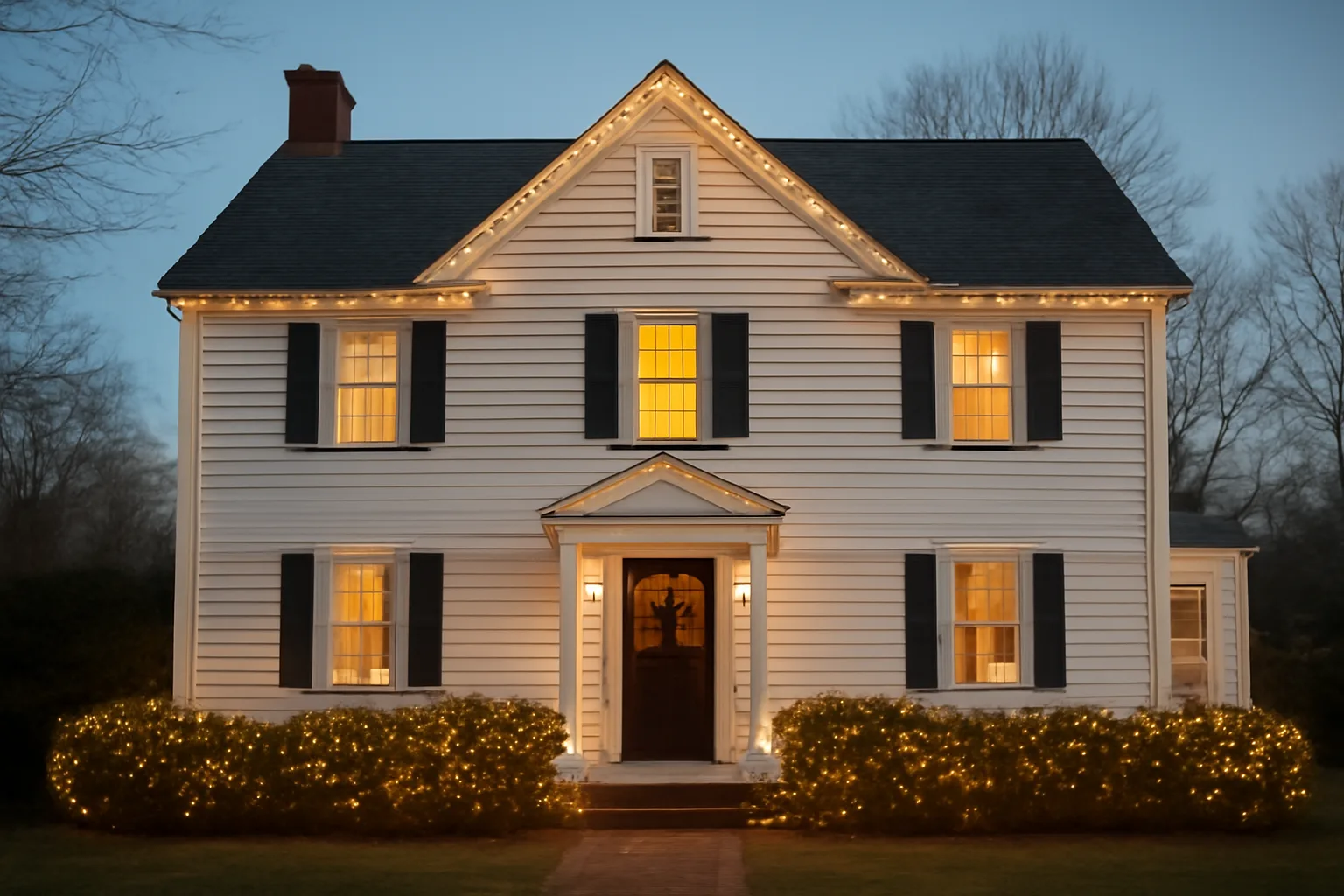
Here is a real-world spread. A modest ranch with 100 feet of front roofline and two shrubs might land around $400 to $600. A colonial with a two-story front elevation and 180 feet of total runs could reach $900 to $1,100. The chart below shows the most common national project range from Angi [1].
Do you need a license for holiday lights in Connecticut?
No, Connecticut has no separate holiday lights license. But you're not off the hook. If the work is paid and takes place on residential property, Connecticut's Home Improvement Act usually requires the person or company to hold a Home Improvement Contractor registration from the Department of Consumer Protection [3][4]. That covers attaching lights to rooflines, wrapping trees, and running extension cords along the house.
The registration carries a Guaranty Fund payment and specific contract rules. Confirm the current threshold, any bond amount, and the fee with DCP before you commit [4]. Some very small jobs may fall below a registration threshold, but the department is the place to verify that.
If the job includes any new electrical connection, a new receptacle, a switch, or permanent low voltage wiring, Connecticut requires a licensed electrician [5]. Hanging plug-in string lights from an existing outdoor outlet does not trigger electrical licensing by itself. Hardwired permanent holiday lighting almost always does.
The same state law sets strict written contract requirements. A verbal deal gives you far less protection than a written one, and the Home Improvement Act gives homeowners specific remedies.
How long does holiday light installation take in Connecticut?
A standard single-family home takes 2 to 4 hours for a two-person crew using existing outlets [2]. A solo installer may need 4 to 6 hours for the same house. Large two-story homes with steep roofs and many trees can take a full day, sometimes two short visits if weather interrupts.
Take-down is usually a separate trip. Many Connecticut companies include take-down in the quoted price, but some charge $75 to $150 for the return visit. Clarify that before you book. Storage of customer-owned lights is another variable. If the company stores the lights, ask if the storage fee is per month or per season.
Connecticut weather adds time. An icy roof or frozen gutters can delay a January take-down for weeks. Book installation by mid-November if you want lights up before the first week of December, and allow a flexible take-down window.
What pushes Connecticut holiday light install prices higher?
Height, roof pitch, and roof material do the most to move a Connecticut holiday lights quote. A single-story ranch with a walkable roof is cheap. A two-story colonial with a 10/12 pitch, slate shingles, or cedar shakes costs more because the crew needs ladder stabilizers, roof jacks, and more time. Ice and snow make those roofs riskier from late November on, and crews price that risk.
Outlet access also matters. Older Connecticut homes often have only one front exterior outlet. If the crew cannot reach the front roofline with a 25-foot cord from that outlet, they run more cord or add a temporary power stake. That adds material cost and sometimes an electrician's time if the existing outlet is not GFCI protected.
HOA and historic district rules can force different attachment methods. Some Connecticut shoreline associations ban roof clips and require magnetic or clip-on gutter mounts. Historic district commissions occasionally require neutral colors or no visible cords. That can add $100 to $300 for special hardware.
Can you install your own holiday lights in Connecticut, and what does DIY cost?
You can absolutely hang your own holiday lights in Connecticut, and you don't need a license for your own home. DIY materials usually run $150 to $500 for a typical single-family home, depending on whether you buy incandescent or LED strings and how much existing lighting you already own. Compare that with $400 to $850 for a pro install.
The savings disappear if you need a long ladder, a second person, and a full Saturday. A 28-foot extension ladder costs $250 to $400 to buy, and renting one for a weekend runs $30 to $60 at local rental yards. If you have a pitch over 6/12 or any fear of heights, a pro is the safer call.
If you do go DIY, buy commercial grade clips, not cheap plastic ones. Connecticut's freeze-thaw cycles pop cheap clips off gutters by January. Use LED strings to keep the load low, and follow the manufacturer's limits on how many strings you can connect end to end. A paper kit like HolidayLightPath's $129 Hang + HOA + Take-Down Kit can simplify first-year planning, but local labor rates still control the installed price.
What should a written Connecticut holiday lights contract include?
Any Connecticut holiday lights contract should be written and signed, with a clear scope, price, start date, and take-down date. The Home Improvement Act gives homeowners specific cancellation rights for home improvement contracts, and the Department of Consumer Protection publishes contract guidance [4]. Don't sign anything until the scope names every roofline, tree, bush, and door the quote covers.
Look for these line items: linear feet of roofline, number of trees and shrubs, type of lights and clips, who owns the lights, who stores them, take-down date, and whether the price includes repair or replacement of burned out bulbs during the season. If any of those items is missing, the quote is not finished.
Deposit rules matter. Connecticut law does not set one fixed deposit limit for all home improvement work, but the Home Improvement Guaranty Fund exists partly because bad contractors take deposits and disappear. A reasonable deposit for a holiday lighting job is 10 to 25 percent, with the balance due after installation. Never pay the full amount up front [4].
What insurance and bond should a Connecticut holiday lights installer carry?
Ask for a current Home Improvement Contractor registration number and verify it with DCP [7]. A legitimate Connecticut contractor carries general liability insurance and workers' compensation coverage if they have employees. Ladder work on your roof is exactly the kind of job where uninsured workers become your problem.
The Home Improvement Contractor registration ties into the Guaranty Fund, but that is not the same as liability insurance. If a worker falls off your roof, workers' compensation is what protects you from a lawsuit. If a ladder gouges your siding, general liability pays. Ask for certificates of insurance with your name listed as certificate holder.
Don't accept a handwritten note that says insured. Call the insurance agent or use the insurer's online certificate verification. A missing policy on a $600 job can turn into a $60,000 medical claim. This is one area where spending an extra $100 for a fully insured company is not a waste.
How do HOAs and historic districts affect holiday light costs in Connecticut?
Many Connecticut neighborhoods with HOAs or condominium associations have written holiday decoration rules. Some permit lights only from the day after Thanksgiving to the second week of January. Others limit color, wattage, or the number of extension cords visible from the street. Read the rules before you buy or install anything. A violation can trigger a fine and a forced removal.
Historic districts add a second layer. Local historic district commissions in towns like Wethersfield, Guilford, and Litchfield have their own design rules. Some require clip-on mounts that do not penetrate wood or brick, and a few require a certificate of appropriateness for any exterior change. That process can add two to six weeks.
The cost impact is modest but real. Specialty clips, magnetic mounts, and cord covers can add $100 to $300 to a quote. If your HOA requires pro installation, that is a bigger cost driver than the lights themselves.
How do you verify a holiday lights contractor in Connecticut?
Start with the Connecticut Department of Consumer Protection's online license verification tool [7]. Enter the contractor's name or registration number. Confirm the registration is active, not expired, and matches the name on the contract. A contractor who gives you a different business name than the registration is a red flag.
Then check the Connecticut Judicial Branch for court records if you want to go further. A history of home improvement lawsuits is not an automatic disqualifier, but it tells you how the person handles disputes. This search takes five minutes and can save you from a contractor who regularly walks off jobs.
Last, ask for three Connecticut references from the last twelve months. Call them. Ask if the crew showed up on time, whether the take-down happened as promised, and if there were any surprise charges. Most homeowners skip this step. It costs nothing.
When should you book holiday light installation in Connecticut?
Book by mid-October for a good Connecticut crew. The best installers fill their calendars by Halloween, and the window between Thanksgiving and the second week of December is the busiest stretch of the year. Waiting until December means higher prices, fewer choices, and a real chance the crew cannot reach your roof before Christmas.
Connecticut's weather creates a second deadline. Early snow or an ice storm can shut down roof work for days. If you want lights for a holiday party in early December, install them by the last week of November. Take-down dates are more flexible, but some companies charge extra for removal after mid-January.
If you have a permanent or semi-permanent system, plan for the electrical work in September or October. Licensed electricians in Connecticut are busy year round, but fall is their rush season for generator panels and heat work. Hardwired holiday lighting goes to the back of the line.
Is hiring a holiday lights installer worth it in Connecticut?
For most Connecticut homeowners, hiring a pro for a $400 to $850 install is worth it if the roof is steep, the house is two stories, or your December calendar is already full. The cost buys labor, ladder work, and far less risk of a fall. Ladder falls send tens of thousands of people to the emergency room every winter, which makes the labor price cheap insurance.
If you have a single-story ranch and you already own ladders, clips, and extension cords, DIY makes sense. You can put the $400 to $850 toward better LED lights and timers instead. Just be honest about your tolerance for heights and cold.
For a paper path, HolidayLightPath's $129 Hang + HOA + Take-Down Kit can simplify a board-approval or DIY project. But no kit replaces a local contractor quote, and no kit changes Connecticut's contractor registration or electrical licensing rules.
How do holiday lights costs in Connecticut compare with other states?
Connecticut sits in the middle to upper cost band for holiday light installs. Florida and Alabama tend to run cheaper because flatter roofs and shorter winters make ladder work easier. Arizona and California vary by market, with coastal California above Connecticut but inland cities below. For reference, see holiday lights cost in florida and holiday lights cost in alabama.
Colorado runs higher on average because steep roofs and early snow show up in October. Georgia splits the difference. If you're comparing quotes against a relative in another state, remember that local labor, workers' compensation, and weather control most of the gap. Check holiday lights cost in colorado, holiday lights cost in arizona, holiday lights cost in california, and holiday lights cost in georgia for their local numbers.
Frequently asked questions
Do you need a license for holiday lights in Connecticut?
No separate holiday lights license exists. Paid residential work usually requires a Home Improvement Contractor registration from the Connecticut Department of Consumer Protection. Any new electrical connection or hardwired permanent lighting needs a licensed electrician. Confirm current thresholds and any bond amounts directly with DCP before hiring.
How much does holiday lights cost in Connecticut?
A typical single-family home in Connecticut runs $400 to $850 for temporary lights, labor, and take-down. Larger two-story homes with steep roofs and many trees can pass $1,200. The national average is $422 with a typical range of $217 to $646, and Connecticut labor rates push the local figure higher.
How long does holiday lights take in Connecticut?
A standard house takes 2 to 4 hours for a two-person crew using existing outdoor outlets. A solo installer may need 4 to 6 hours. Large two-story homes with heavy tree wrapping can take a full day. Take-down is usually a separate visit, often taking half the install time.
What is the cheapest month to install holiday lights in Connecticut?
October and early November are the cheapest and least rushed. Many crews discount work booked before Halloween. December installs cost more because demand peaks, and weather delays make scheduling harder. If you want lights for early December, book installation no later than mid-November.
Do Connecticut HOAs restrict holiday lights?
Many do. Common restrictions include a start date after Thanksgiving, an end date by mid-January, and limits on cord visibility or roof clips. Read the HOA rules before buying clips or signing a contract. Violations can bring fines and forced removal, which adds cost.
Can a handyman install holiday lights in Connecticut without a license?
A paid handyman doing residential home improvement work generally needs a Home Improvement Contractor registration in Connecticut, even for simple light hanging. Small jobs below a certain dollar amount may be exempt, but verify the current threshold with DCP. Hardwired electrical work always needs a licensed electrician.
Is a building permit required for holiday lights in Connecticut?
Temporary plug-in holiday lights do not usually need a municipal building permit. Permanent hardwired lighting or any new outdoor outlet may require an electrical permit and a licensed electrician. Always confirm with the local building official before starting permanent work.
Does homeowners insurance cover holiday light installation damage in Connecticut?
It depends on the policy and the cause. If a contractor damages your roof or siding, their general liability insurance should pay. If a worker is injured on your property, their workers' compensation coverage is the first line. Ask for certificates of insurance and keep a copy.
How much does holiday light take-down cost in Connecticut?
Some installers include take-down in the original quote. If take-down is separate, expect $75 to $150 for a standard single-family house. Storage of customer-owned lights may add a seasonal or monthly fee. Get the take-down date and storage terms in writing.
Can I leave holiday lights up all year in Connecticut?
Physically yes, but weather, HOA rules, and UV damage make it a bad idea for temporary string lights. Ice, snow, and summer heat degrade clips, cords, and bulbs. Permanent systems designed for year-round use are different, and they usually need a hardwired electrical connection.
What does a Home Improvement Contractor registration check show in Connecticut?
The DCP license verification tool shows whether the registration is active, the business name, and any disciplinary actions. Always verify the registration number before paying a deposit. A mismatch between the contract name and the registered name is a red flag.
Do I need a written contract for holiday lights in Connecticut?
Yes for any paid home improvement work. Connecticut's Home Improvement Act gives homeowners strong rights when a written contract exists, and courts look harshly at verbal deals. The contract should list scope, price, dates, deposit, take-down, and who owns the lights.
How much do permanent holiday lights cost in Connecticut?
Permanent LED track or system lighting usually runs $2,000 to $5,000 or more before electrical permits, depending on linear feet and roof complexity. Hardwiring and new outlets add licensed electrician labor. Get at least three written quotes, and confirm whether the system includes seasonal color changes.
Should I tip holiday light installers in Connecticut?
Tipping is not required or expected for a contracted install. If the crew does exceptional work on a steep roof or in bad weather, $20 to $50 per person is a generous thank-you. For a large company, a positive online review helps more than cash.
Sources
- Angi, How Much Does It Cost to Hang Christmas Lights?: National average for Christmas light installation is $422, with a typical range from $217 to $646.
- HomeGuide, Christmas Light Installation Cost: Temporary holiday lights cost $2 to $6 per linear foot; a standard install takes 2 to 4 hours.
- Connecticut General Statutes, Chapter 400, Home Improvement Contractors, Sec. 20-419: Home improvement work on residential property requires written contracts and registration under the Home Improvement Act.
- Connecticut Department of Consumer Protection, Home Improvement Contractor Registration: Registration, Guaranty Fund, and contract requirements for home improvement contractors.
- Connecticut Department of Consumer Protection, Electrical Work Licenses: Electrical contracting and wiring work requires a Connecticut electrical license.
- U.S. Bureau of Labor Statistics, Occupational Outlook Handbook, Electricians: The median annual wage for electricians was $60,040 in May 2022.
- Connecticut Department of Consumer Protection, Verify a License (eLicense): Online tool to verify active contractor and electrician licenses with DCP.